
“The way to keep weather forecasts accurate is to have a robust system that can provide timely warnings and updates,” said a renowned meteorologist. This statement highlights the National Weather Service‘s key role. They offer trusted forecasts that affect our daily lives and safety.
The National Weather Service is a vital organization. It has been leading in giving accurate and reliable local weather info. With a long history and a strong dedication to the public, it’s the top choice for weather forecasts.
Key Takeaways
- Reliable forecasts from a trusted source
- Accurate and timely weather information
- Critical role in public safety and daily planning
- Advanced technology for forecast accuracy
- Commitment to serving the nation’s needs
The History and Evolution of Weather Forecasting in America
The history of weather forecasting in the United States is filled with innovation. From early methods to modern science, the National Weather Service (NWS) has led the way. They’ve used new technologies and discoveries to make forecasting better.
Early Weather Observation Methods
At first, weather watching was done by hand. People used weather stations and reports from observers. The data was limited and not always right, making it hard to predict the weather.
As weather forecast skills grew, so did the ways to gather meteorological information.
The Telegraph Revolution in Weather Reporting
The telegraph changed weather reporting in the mid-1800s. It let weather data travel fast over long distances. This made it easier to share weather news quickly, improving forecasts.
A historical account says, “The telegraph started a new era in weather forecasting by making data sharing fast.”
Transition to Modern Meteorological Science
The 20th century brought big changes with radar, satellites, and computers. These tools helped the NWS give accurate weather forecast services. These are key for keeping people safe and helping with business decisions.
Today, the NWS keeps getting better with new tech. They work hard to improve how accurate and timely their forecasts are, helping with severe weather.
The story of weather forecasting in America shows the power of innovation and science. Looking ahead, the NWS will keep giving the nation important meteorological information.
Understanding the National Weather Service Organization
The NWS has a complex structure. It includes regional offices and local weather centers. This setup ensures weather services are tailored for different areas.
Organizational Structure and Leadership
The National Weather Service is led by a Director chosen by the Secretary of Commerce. The Director sets the NWS’s overall strategy. The organization has several branches, like the Office of the Director and the Weather Prediction Center.
Regional Offices and Local Weather Forecast Centers
The NWS has many regional offices and local centers. These places issue forecasts, warnings, and weather info for their areas. There are 122 Weather Forecast Offices (WFOs) across the U.S., each covering a specific region.
Relationship with NOAA and Department of Commerce
The National Weather Service is part of NOAA, which is in the Department of Commerce. This connection helps the NWS get resources and expertise from both. It improves the NWS’s ability to give accurate and timely weather forecasts.
| Agency | Role |
|---|---|
| National Weather Service (NWS) | Provides weather forecasts, warnings, and conditions |
| National Oceanic and Atmospheric Administration (NOAA) | Oversees NWS and other environmental agencies |
| Department of Commerce | Parent department for NOAA and NWS |
Advanced Technologies Behind Weather Predictions
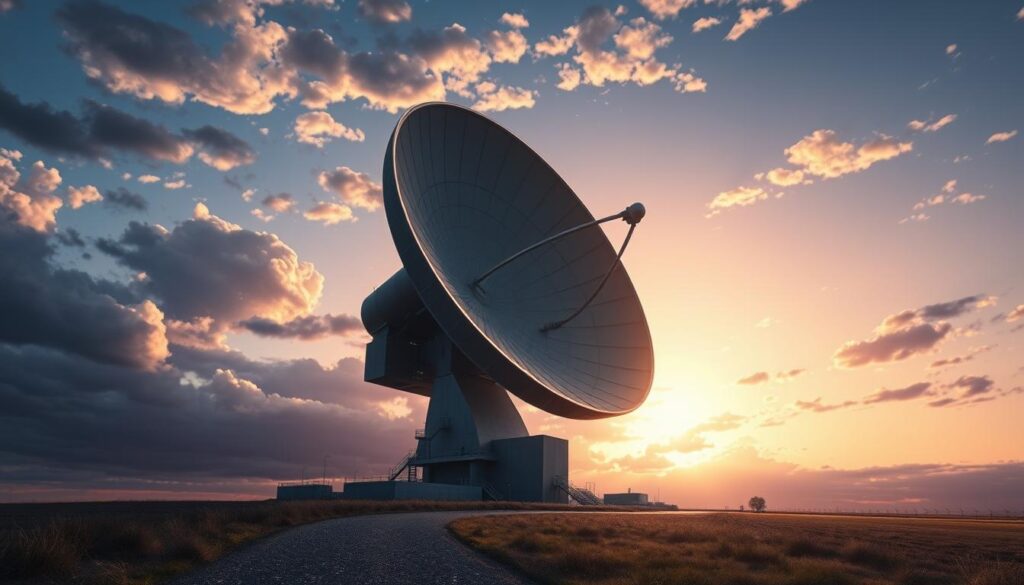
The National Weather Service (NWS) uses cutting-edge technologies to improve weather forecasts. These tools help the NWS give the public accurate and timely weather updates.
NEXRAD Systems
The NWS has Next-Generation Radar (NEXRAD) systems to spot rain and other weather. These Doppler radar systems help meteorologists track storms and predict weather better.
Geostationary and Polar-Orbiting Satellites
The NWS also uses geostationary and polar-orbiting satellites for weather data. Geostationary satellites stay fixed over one area, giving constant updates. Polar-orbiting satellites cover the globe, showing weather patterns worldwide.
Supercomputing and Numerical Weather Prediction
The NWS runs supercomputing for complex weather models. These models use data from radar, satellites, and more to forecast the weather. Meteorologists analyze this data to make more accurate predictions.
These advanced technologies help the NWS give accurate and reliable weather forecasts. This helps keep people safe across the United States.
How the National Weather Service Creates Daily Forecasts
The NWS makes daily forecasts using modern tech and weather knowledge. They follow a detailed process to ensure their forecasts are right and trustworthy.
The Forecast Production Process
The NWS starts by gathering lots of data from weather stations, radar, satellites, and balloons. They then use these data in advanced computer models to guess the weather.
Key steps in the forecast production process include:
- Data collection from various weather monitoring systems
- Analysis of data using numerical weather prediction models
- Interpretation of model outputs by skilled meteorologists
Role of Meteorologists in Data Interpretation
Meteorologists are key in making sense of the data and models. They use their knowledge to predict the weather accurately.
Forecast Verification and Accuracy Metrics
The NWS checks how accurate their forecasts are. They compare what was forecasted with what actually happened to get better.
Some of the key accuracy metrics used include:
- Mean Absolute Error (MAE) for temperature forecasts
- Probability of Detection (POD) for precipitation forecasts
- Critical Success Index (CSI) for severe weather events
Continuous Improvement Initiatives
The NWS keeps working to get better at forecasting. They use new tech and improve their models to make forecasts more accurate.
The NWS’s drive for improvement means the public gets the most accurate forecasts. This helps people make better decisions in their daily lives.
Severe Weather Warning Systems and Protocols
The National Weather Service (NWS) has a detailed system for severe weather warnings. These warnings are key for keeping people safe in the United States. The system aims to give timely and correct info to everyone.
Watch vs. Warning: Understanding the Difference
The NWS’s system is clear about the difference between a “watch” and a “warning.” A watch means severe weather might happen. A warning means it’s happening now or very soon. Knowing this helps people act fast.
Storm Prediction Center Operations
The Storm Prediction Center (SPC) is a big part of the NWS’s system. It’s in Norman, Oklahoma, and forecasts severe storms and tornadoes. The SPC works with local offices to prepare for severe weather.
Integrated Warning Team Approach
The NWS uses an Integrated Warning Team (IWT) to improve warnings. The IWT includes meteorologists, emergency managers, and others. This team works together to make sure warnings are clear and timely.
Thanks to new tech, clear rules, and teamwork, the NWS’s system saves lives. It helps lessen the damage from severe weather.
Climate Services and Long-term Weather Monitoring
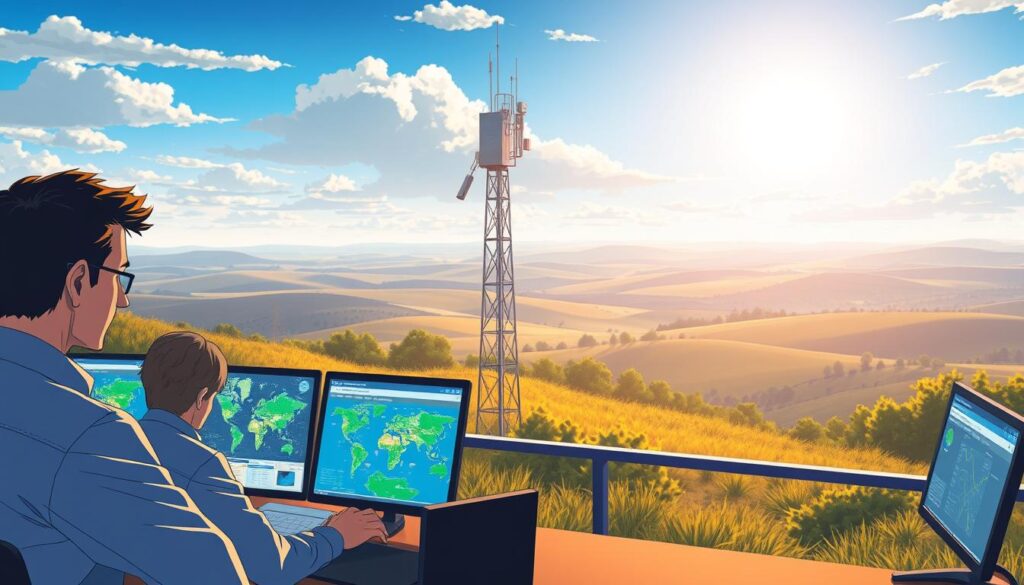
Climate services are key to the NWS’s work. They help people make smart choices with weather trends and forecasts. The NWS offers climate services for planning in areas like farming, water, and emergency prep.
Climate Prediction Center Functions
The Climate Prediction Center (CPC) is a big part of the NWS’s climate work. It watches and predicts climate changes from weeks to years. The CPC gives important info on climate patterns, like El Niño and La Niña events, which affect global weather.
Seasonal Outlooks and Drought Forecasting
The NWS gives seasonal outlooks for temperature and rain over months. These forecasts are key for planning in farming and water management. The NWS also has drought forecasting tools to spot drought risks early, helping to lessen its effects.
Historical Data Archives and Climate Normals
The NWS keeps big archives of past climate data. These archives help set climate normals. Normals are a base for understanding today’s climate and are vital for research and planning.
Accessing National Weather Service Information in the Digital Age
The National Weather Service (NWS) has changed how we get weather info today. It uses digital services to make sure we have the latest weather info. This info is available on many platforms.
Weather.gov Website Features and Navigation
The weather.gov website is a key place for weather forecasts, warnings, and conditions. It has detailed forecasts, radar images, and weather alerts. It’s great for everyone, from the public to professionals.
Mobile Applications and Notification Systems
The NWS has made mobile apps for weather info on the move. These apps send alerts for big weather events. This way, you get updates and alerts right away.
NOAA Weather Radio All Hazards Network
The NOAA Weather Radio All Hazards Network is a big network across the U.S. It gives weather info straight from the NWS office nearest you. It sends warnings, watches, forecasts, and more 24/7.
Social Media Channels and Alert Systems
The NWS uses social media to share weather info and alerts. By following NWS on social media, you get updates on weather and emergencies fast.
| Platform | Description | Benefits |
|---|---|---|
| weather.gov | Comprehensive weather information website | Detailed forecasts, radar imagery, weather alerts |
| Mobile Apps | On-the-go weather information and alerts | Push notifications for critical weather events |
| NOAA Weather Radio | Continuous weather information broadcast | 24/7 weather updates, warnings, and forecasts |
| Social Media | Real-time weather updates and alerts | Timely information on weather conditions and emergencies |
Specialized National Weather Service Programs
The National Weather Service (NWS) has specialized programs for different groups. These programs make weather info more accurate and useful for various sectors.
These programs cater to specific needs, like aviation, marine, fire weather, and space weather. They help protect lives and property while boosting the economy.
Aviation Weather Center Services
The NWS’s Aviation Weather Center (AWC) gives vital weather info to the aviation world. It offers forecasts, warnings, and advisories for weather that might affect flights. The AWC’s work is key for safe air travel and smooth air traffic management.
Marine, Coastal, and Great Lakes Forecasts
The NWS also offers marine weather forecasts. These cover coastal areas, the Great Lakes, and offshore waters. They help ensure safe navigation and marine operations. The NWS warns of dangerous marine conditions like storms and high seas.
Fire Weather and Air Quality Prediction
The NWS provides fire weather forecasts to help manage wildfires. These forecasts aid firefighters and land managers in their work. The NWS also works with other agencies to predict air quality, protecting public health.
Space Weather Prediction Center
The Space Weather Prediction Center (SWPC) is a vital part of the NWS. It deals with the effects of solar activity on Earth’s magnetic field, radiation, and upper atmosphere. The SWPC issues forecasts and warnings for space weather events that could harm satellite operations, communication systems, and power grids.
| Specialized Program | Description | Primary Users |
|---|---|---|
| Aviation Weather Center | Forecasts and warnings for aviation | Aviation industry, air traffic control |
| Marine Forecasts | Forecasts for marine and coastal areas | Mariners, coastal residents |
| Fire Weather | Forecasts for wildfire prediction | Firefighters, land managers |
| Space Weather Prediction Center | Forecasts for space weather events | Satellite operators, power grid managers |
The National Weather Service During Extreme Weather Events
The NWS leads in responding to extreme weather, keeping people safe with accurate forecasts and warnings. They use advanced tech and expert meteorologists to give vital info to the public and emergency teams.
Hurricane and Tropical Cyclone Tracking
The NWS watches hurricanes and tropical cyclones closely. They use satellite images and radar to track their path and strength. This info is key for timely warnings and advisories.
Hurricane Tracking Techniques include:
- Satellite imagery to monitor storm development and movement
- Radar systems to track storm intensity and precipitation
- Storm surge modeling to predict coastal flooding
Tornado and Severe Thunderstorm Prediction
The NWS predicts tornadoes and severe thunderstorms with Doppler radar and other tech. Meteorologists analyze this data to send out timely warnings.
Winter Storm and Blizzard Forecasting
For winter storms and blizzards, the NWS gives detailed forecasts. They include snowfall totals, wind speeds, and how weather will affect travel and daily life. This helps people prepare and respond to winter weather.
| Winter Storm Impact | Typical Effects | NWS Response |
|---|---|---|
| Heavy Snowfall | Disrupted transportation, power outages | Detailed snowfall forecasts, travel advisories |
| High Winds | Property damage, hazardous conditions | Wind speed forecasts, wind chill advisories |
| Freezing Temperatures | Frostbite, hypothermia risks | Temperature forecasts, cold weather advisories |
Flood and Flash Flood Warning Systems
The NWS has a detailed flood and flash flood warning system. They use rainfall data, river gauges, and more to predict floods. They issue timely warnings to protect lives and property.
The NWS plays a key role in extreme weather events. They use advanced tech, expert analysis, and quick communication. By giving accurate weather info, they help keep the public safe and reduce extreme weather impacts.
Using Weather Data in Your Daily Life
Knowing and using weather data is key for smart decisions in daily life. The National Weather Service (NWS) offers a lot of info. This info helps plan activities, understand weather, and get ready for weather events.
Interpreting Forecast Probability and Confidence Levels
Understanding forecast probability and confidence is vital. The NWS gives probability forecasts on weather chances. For example, a 30% chance of rain means there’s a 30% chance of rain in the forecast area. Knowing these probabilities helps make better choices.
Also, knowing the confidence level of a forecast is important. High confidence means the forecast is likely right. Low confidence means there’s more doubt. By looking at both, you can judge how reliable the forecast is.
Planning Outdoor Activities with Weather Information
Weather data is great for planning outdoor fun. Whether it’s a picnic, hike, or event, knowing the weather helps prepare. Here are tips for using weather data:
- Check the NWS website or app for the latest forecast.
- Use radar to see where rain or other weather is.
- Think about the wind forecast for activities like sailing or kite flying.
- Plan around weather alerts and warnings from the NWS.
By using weather data well, you can plan better, avoid weather risks, and enjoy outdoor activities more.
The Future of Weather Forecasting and the National Weather Service
The National Weather Service is ready to use new technologies to improve weather forecasts. These new tools and methods will make forecasts more accurate and timely.
Artificial Intelligence in Weather Prediction
Artificial intelligence (AI) is becoming a big part of weather prediction. AI can look at lots of data fast and find patterns that humans might miss. This will help make forecasts more accurate, even for hard-to-predict weather.
Climate Change Adaptation in Forecasting
The National Weather Service is also working on forecasting for climate change. As the weather changes, it’s important to understand and predict these changes. This means improving forecasting models and sharing climate information with the public.
Enhanced Resolution Models and Hyperlocal Forecasts
New modeling technology is making forecasts more detailed and accurate. This is great for severe weather, where knowing exactly what’s coming is key. Hyperlocal forecasts will help communities get ready for weather better.
Public-Private Partnerships in Weather Services
The future of weather forecasting also means working together with private companies. Public-private partnerships will bring new ideas and improve weather services. This includes creating new technologies and making current tools better.
| Technological Advancement | Impact on Weather Forecasting | Benefit to the Public |
|---|---|---|
| Artificial Intelligence | Enhanced accuracy in predictions | Better preparedness for severe weather |
| Climate Change Adaptation | More relevant forecasts due to changing weather patterns | Informed decision-making for long-term planning |
| Enhanced Resolution Models | More precise local forecasts | Improved safety during weather events |
| Public-Private Partnerships | Innovation in weather services | Access to more accurate and timely weather information |
Conclusion: The Essential Role of the National Weather Service in American Life
The National Weather Service is key to our daily lives. It gives us important weather info. This helps us plan our days and stay safe during bad weather.
The NWS helps many areas like flying, farming, and emergency teams. It uses the latest tech to give us accurate forecasts. This helps save lives and money.
In America, the National Weather Service is vital for safety and smart choices. As weather challenges grow, the NWS keeps working to get better. It stays up-to-date with new weather science.